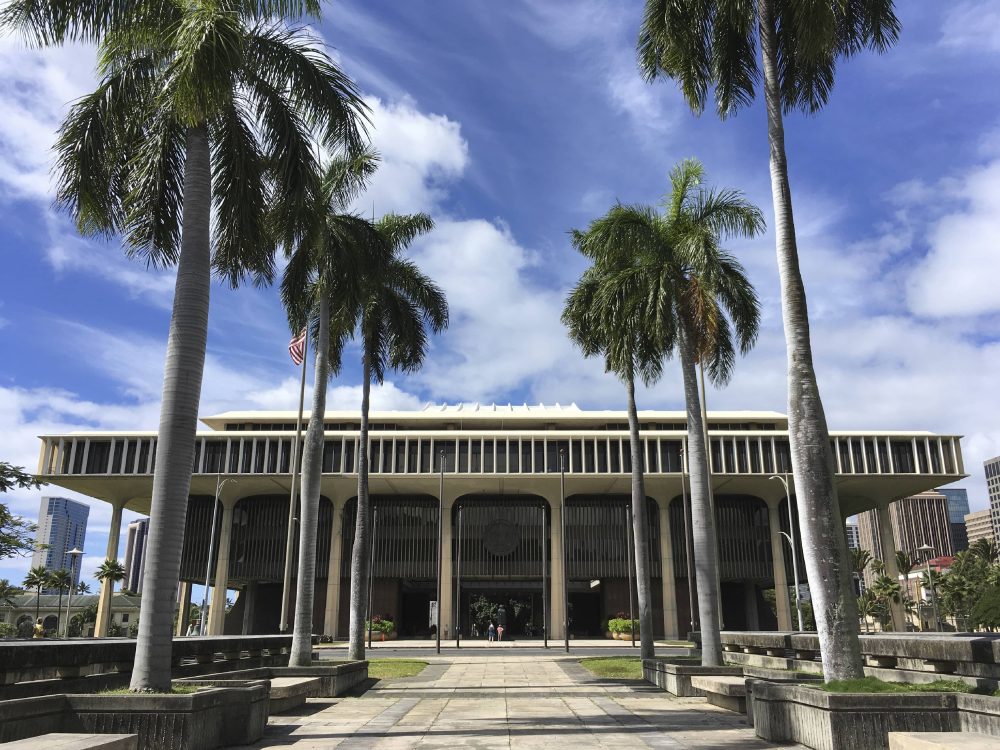
(AP) — Hawaiʻi lawmakers are on course to commit $600 million to a long-underfunded program providing housing and land leases to Native Hawaiians as they wrap up the current legislative session this week.
The allocations come after Hawaiʻi tourism and state tax revenues rebounded from a COVID-19 pandemic crash. Lawmakers had a $2 billion general fund surplus this year instead of a massive revenue shortfall.
In accordance with Hawaiʻi law, they’re giving some of the bounty directly to taxpayers: $300 will go to individuals who earned less than $100,000 a year in 2021 and to couples who earned less than $200,000. Individuals and couples who earned more than those amounts will receive $100.
House and Senate lawmakers are expected to pass the refund legislation when it goes up for floor votes.
The $600 million for Native Hawaiian housing will help those eligible under The Hawaiian Homes Commission Act of 1920.
The century-old law was meant to help Hawaiians be economically self-sufficient by providing them with land. People with at least 50% Hawaiian blood quantum can apply for a 99-year lease for $1 a year.
But Hawaiʻi has been slow to award leases, and the waitlist for properties has more than 28,000 names on it.
Surveys by the Department of Hawaiian Home Lands indicated some on the waitlist could instead get help with a down payment to buy a home on the market instead of signing a lease, so some of the allocation will go toward this.
Rep. Sylvia Luke, the chairwoman of the House Finance Committee, said lawmakers had a moral obligation to make a large commitment to help Native Hawaiians this session.
“If we’re not going to do it when we have a surplus, when are we ever going to do it?” Luke said last month during a “talk story” session over Zoom with the Council on Native Hawaiian Advancement.
State Sen. Jarrett Keohokalole, who is co-chair of the Native Hawaiian Caucus, called the funding “historic.”
People should expect to see significant home construction on Hawaiian home lands in the next five years, he said. Those who would prefer help with a down payment may be able to buy a home on the housing market right away instead of waiting for a home lands lease, he said.
“It’s going to be important for the next governor to put a team in place at the Department of Hawaiian Home Lands to make sure that that money doesn’t go to waste,” Keohokalole said.
Gov. David Ige’s second term ends in December and he’s not allowed to run for a third term.
Together with funding and legislation for other Native Hawaiian issues this session, Keohokalole said lawmakers took the most significant action in favor of the Hawaiian community in 100 years.
Lawmakers are also putting $500 million into the state’s rainy day fund for emergencies. Ige had proposed putting $1 billion into it at the beginning of the session, but lawmakers balked at that amount.
The fund had $395 million in May 2020, when lawmakers raided it to balance the budget during the pandemic.
This year, the budget also includes $115 million in federal coronavirus relief money to build broadband infrastructure statewide and $33 million in state money to further expand broadband.
Flush coffers also allowed lawmakers to fund programs that hadn’t received money in years, like $26 million to pay for adult dental care for Medicare patients. Lawmakers had to cut funding for this when revenues crashed during the Great Recession and haven’t been able to restore it since.
© copyright 2022 Associated Press. All rights reserved