(AP) — The federal government is giving more than a half-billion dollars to coastal communities to help them use nature-based preventative measures to address climate-related flooding and other disasters.
The National Oceanic and Atmospheric Administration on Friday announced it is allocating $575 million to 19 resiliency projects in several states, with a particular emphasis on Native American, urban and traditionally underserved communities that experience repeated floods, wildfires and other weather-related disasters.
U.S. Secretary of Commerce Gina Raimondo said in a statement that the effort was intended to “help make sure America’s coastal communities are more resilient to the effects of climate change,”
The projects include more than $72 million for so-called “living shorelines” in New Jersey, using native plants, oyster reefs and other natural materials to restore and protect waterfronts. There also is money to replace sidewalks with permeable pavement, to top buildings with plants to help absorb heat, and to establish parks in flood-prone areas that can absorb floodwaters.
Other work includes climate risk assessments for over 100 Native communities in Alaska, expanding statewide tribal adaptation technical assistance, and sharing local knowledge.
It also includes using nature-based solutions to protect California’s Monterrey Bay, establish native forests to reduce wildfire risk in Hawaii, and open spaces on Rhode Island’s Aquidneck Island.
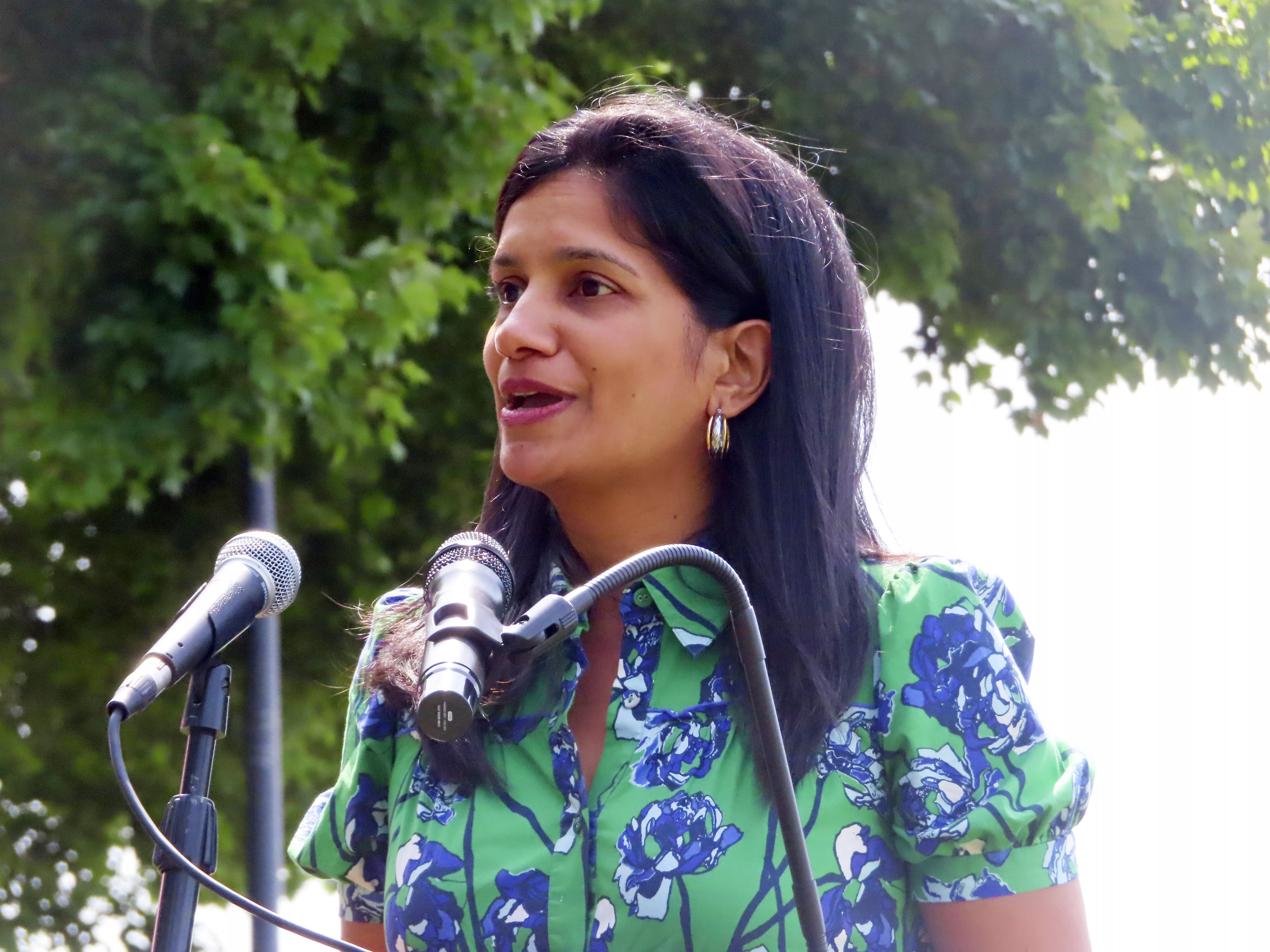
Officials from NOAA and the U.S. Commerce Department held a press conference Friday in Perth Amboy, New Jersey, to describe some of the work planned for that state, which was pummeled by Superstorm Sandy. The gathering was held on a bayfront walkway that was rebuilt using government recovery funds after the 2012 storm.
“Climate change is real, it is here, and it is now,” said Shawn LaTourette, New Jersey’s environmental protection commissioner. “We experience routine flooding that pushes families out of their homes on such a frequent basis. That illustrates the need for federal action and investment.”
The money is part of NOAA’s Climate Resilience Regional Challenge funded by the Inflation Reduction Act.
Environmental groups have long favored natural coastal protection over so-called “hard engineering” solutions such as sea walls and bulkheads. Those, they argue, can worsen erosion by causing sand and sediment to scour away from the barriers.
Many coastal communities seek to use a mixture of both types of shore protection in areas where nature-based solutions alone won’t suffice.
But some innovative projects have emerged from this school of thought, including work by New Jersey’s American Littoral Society to protect the eroding shorelines of a river by using coconut husk fibers in mats to stabilize the land where it meets the water.
U.S. Rep Frank Pallone Jr., a New Jersey Democrat, said several of the projects will incorporate rain gardens, “green roofs” and permeable pavement to absorb rain water and storm surges rather than carrying them into quickly overflowing sewers.