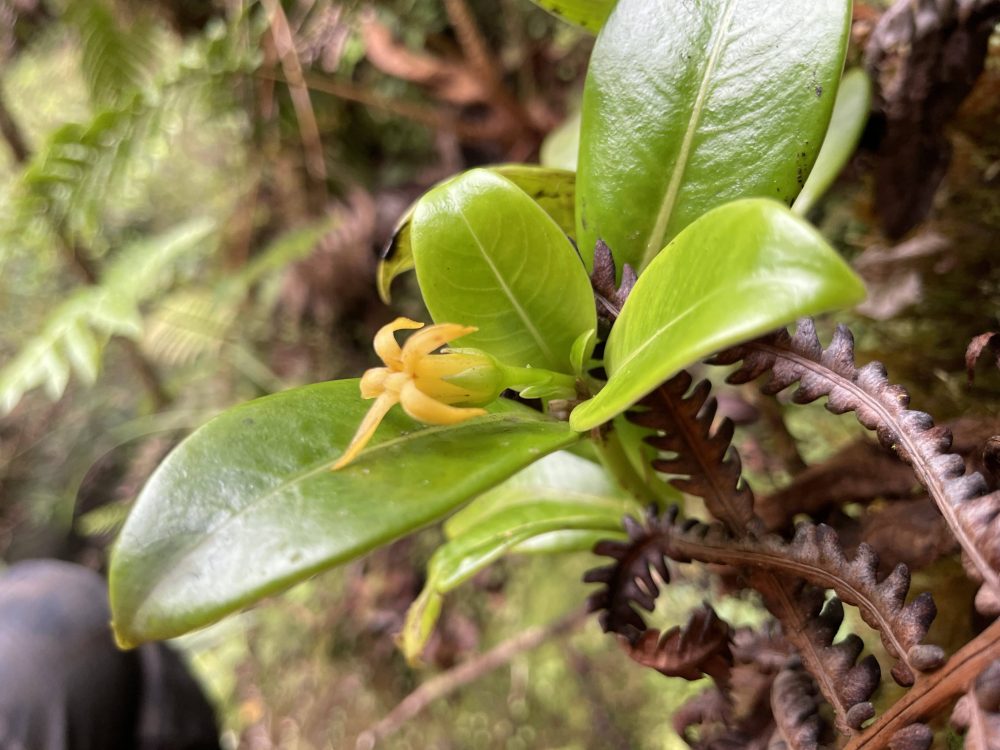
The discovery of five new plant species and the rediscovery of several species that were thought to have been lost are detailed in the new Rare Plant Program 2025 Island Highlights report. This gives enthusiasts for Hawaiian plants a great deal to celebrate during April’s Native Plant Month observance.
The report, which was produced by the Department of Land and Natural Resources (DLNR) Division of Forestry and Wildlife (DOFAW) Rare Plant Program and the Plant Extinction Prevention Program (PEPP). PEPP, is a collaboration of DLNR and the University of Hawaiʻi at Mānoa Pacific Cooperative Studies Unit.
The five new plant species were discovered in recent years on Kauaʻi during remote explorations by PEPP and the National Tropical Botanical Garden and were formally announced in 2025. These plants are found nowhere else on Earth. Some, like Lysimachia barcae, a delicate shrub with a stunning purple flower, have fewer than a dozen individuals known to exist.
On Hawaiʻi Island, individuals of two critically rare species of ʻoha wai and makou have been found. Previously, botanists were aware of just one remaining individual of this species of ʻoha wai in the wild, and no remaining wild individuals of this species of makou.
Five species on Lānaʻi have been rediscovered after decades with no sightings. Botanists had feared these plants might no longer be alive on Lānaʻi.
On Oʻahu, a species of haʻiwale was found for the first time since 1943.
The annual report also highlights many of the challenges native plants in Hawaiʻi are facing, including the presence of hoofed animals and infestations of coconut rhinoceros beetles on multiple species of loulu (native fan palms).
The full report is available at https://dlnr.hawaii.gov/ecosystems/rare-plants/
Photo credit: DLNR